×
- Hello
- Login or Register
- Quick Links
- Live Chat
- Track Order
- Parts Availability
- RMA
- Help Center
- Contact Us
- Shop for
- Acura Parts
- Acura Accessories

My Garage
My Account
Cart
Genuine Acura Legend Axle Shaft
Car Axle Shaft- Select Vehicle by Model
- Select Vehicle by VIN
Select Vehicle by Model
orMake
Model
Year
Select Vehicle by VIN
For the most accurate results, select vehicle by your VIN (Vehicle Identification Number).
23 Axle Shafts found






| Page 1 of 2 |Next >
1-20 of 23 Results
Acura Legend Axle Shaft
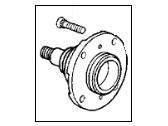
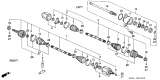
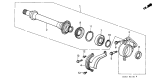
The Axle Shaft in Acura Legend vehicles is a more significant assembly that transmits power from the differential to drive wheels so that it can rotate independently to increase the traction. These ancillary steel members are of different types including some types of axles for trucks and older models of cars or halfshafts in independent suspension vehicles. The differential and the axle shafts are placed in a solid axle and the half-shafts relaying the power from transaxle to wheels. Axle shafts do deteriorate due to rubbing against the obstacles and cause noise and vibration problems; other times; the seals wear out causing leakage of the lubricants and contamination of the brakes. All in all, the Axle Shaft has the primary responsibilities of bearing the weight for all car models of Acura Legend and transmitting torque to manage a good wheel alignment.
We provide a broad range of OEM Acura Legend Axle Shaft at unbeatable prices on our website. For your OEM parts, You can count on the guaranteed quality, manufacturer's warranty, outstanding customer service, and prompt delivery. We look forward to your visit.
Acura Legend Axle Shaft Parts Questions & Experts Answers
- Q:How to Replace a Front Axle Shaft on an Acura Legend?Posted by Trenton H.A:If the vehicle has steel wheels, remove the hub cap; if it has mag wheels, remove the wheel lug nut cover. If the wheel hub nut is staked, unstake it with a chisel; if it's secured by locking tabs, bend the tabs out. Break the hub nut loose with a socket and large breaker bar. Loosen the wheel lug nuts, raise the front of the vehicle, and support it securely on jackstands. Remove the wheel lug nuts and the front wheel. Remove the Axle Shaft hub nut by placing a pry bar between two of the wheel studs to prevent the hub from turning, then loosen the nut. Drain the transaxle lubricant. Disconnect the damper fork from the shock absorber assembly and the lower arm. Separate the lower control arm and the tie rod end from the steering knuckle. Swing the knuckle/hub assembly out until the end of the driveaxle is free of the hub, supporting the outer end of the driveaxle with a piece of wire to avoid unnecessary strain on the inner CV joint. Carefully pry the inner end of the driveaxle from the transaxle or intermediate shaft using a large screwdriver or prybar positioned between the transaxle or bearing support and the CV joint housing. Support the CV joints and carefully remove the driveaxle from the vehicle, holding the inner CV joint horizontal until the driveaxle is clear of the intermediate shaft to prevent damage to the intermediate shaft seal or the differential seal. Pry the old spring clip from the inner end of the driveaxle and install a new one. Lubricate the differential seal with multi-purpose grease and raise the driveaxle into position while supporting the CV joints. Insert the splined end of the inner CV joint into the differential side gear or the intermediate shaft, ensuring the spring clip locks in its groove. Apply a light coat of multi-purpose grease to the outer CV joint splines, pull out on the strut/steering knuckle assembly, and install the stub axle into the hub. Insert the studs of the lower control arm ball joint and the tie-rod end into the steering knuckle and tighten the nuts, using new cotter pins. Install the damper fork. Install the hub nut and, if applicable, a new locking tab washer. Lock the disc so it can't turn, then tighten the hub nut securely, but do not tighten it to the actual torque specification until the vehicle is lowered to the ground. Grasp the inner CV joint housing and pull out to ensure the driveaxle has seated securely in the transaxle. Install the wheel and lug nuts, then lower the vehicle. Tighten the hub nut, using a hammer and punch to stake the nut to the groove in the driveaxle. If the hub nut uses a locking tab, bend the tabs up against the nut. Install the wheel cover if applicable. Refill the transaxle with the recommended type and amount of lubricant.Answered by Acura Parts Specialist Mitch / Jun 11, 2024