×
- Hello
- Login or Register
- Quick Links
- Live Chat
- Track Order
- Parts Availability
- RMA
- Help Center
- Contact Us
- Shop for
- Acura Parts
- Acura Accessories

My Garage
My Account
Cart
Genuine Acura Legend Rod Bearing
Engine Connecting Rod Bearing- Select Vehicle by Model
- Select Vehicle by VIN
Select Vehicle by Model
orMake
Model
Year
Select Vehicle by VIN
For the most accurate results, select vehicle by your VIN (Vehicle Identification Number).
17 Rod Bearings found

Acura Legend Bearing C, Connecting Rod (Green) (Daido)
Part Number: 13213-PY3-003$22.79 MSRP: $31.78You Save: $8.99 (29%)Ships in 1-3 Business Days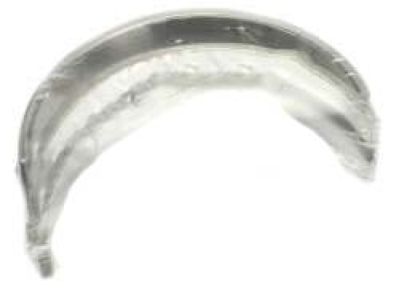
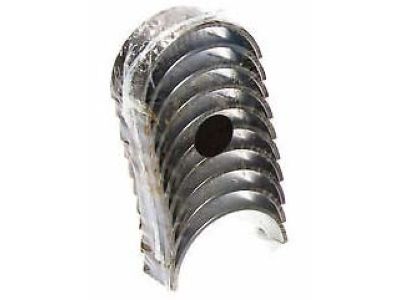


Acura Legend Rod Bearing
The Acura Legend Rod Bearing allows the crankshaft to rotate freely by preventing the touching of metal through a thin film of pressurized oil. Within each Acura V6, the unadorned Rod Bearing exists within the split bore of the connecting rod and cap, its small crush fastening it tightly after torquing the bolts. The grooves and oil passage of the Rod Bearing are oriented with block drillings for constant feed by the pump to control friction and support the rotating mass. Over the production life of the Legend, two chief constructions appeared, bi-metal and tri-metal. The steel-backed, aluminum-alloy-faced bi-metal Rod Bearing units are silicon-enhanced for hardness and seizure resistance and are ideal for the average-day Acura commuter. Tri-metal variants consist of a layer of copper with an overlay of lead-tin-copper, imparting extra strength and a degree of fatigue resistance. Furthermore, the ability to embed debris makes them desirable for elevated stress Legend driving. The oil clearance must be precisely verified at about two thousandths of an inch regardless of type. This is due to the fact that an oversized Rod Bearing or worn journal can introduce knock. Further, the problem can result in premature failure in any Acura Legend engine.
We provide a broad range of OEM Acura Legend Rod Bearing at unbeatable prices on our website. For your OEM parts, You can count on the guaranteed quality, manufacturer's warranty, outstanding customer service, and prompt delivery. We look forward to your visit.
Acura Legend Rod Bearing Parts Questions & Experts Answers
- Q:Why is it essential to retain old main and connecting rod bearings during engine overhaul on an Acura Legend?Posted by Oliver M.A:Keep old main and connecting rod bearings when doing an engine overhaul, then look at them to understand how well the engine ran. The reason bearings don't last is typically because of dirty oil, too much weight, or rust buildup. If we don't fix these problems before reinstalling the engine parts, they will break again. When you check bearings, take them off their current spots and set them down neat on a fresh surface to see where the crankshaft meets problems. Dirt particles can get into the engine during assembly, pass through filters, or come from machine tools, and these contaminants can hide in bearings and wreck them; you need to clean well and change oils often to stop this from happening. Failures happen when too much heat builds up, when bearings get overloaded, when oil leaks or passes block, or when friction destroys the bearing. When we drive fast but slowly, or make many short trips, these driving practices worsen bearing life because they deplete the oil film that keeps bearings from wearing out and create conditions for bearing corrosion to develop. Putting the parts in wrong during installation blocks clean oil from reaching the engine, which harms the engine when small pieces get trapped inside. When current bearings are bad or oil clearance is wrong, you must find new bearings that match, and check that they match the ground crankshaft size. Check the original color code of main bearings for standard size, and if not visible, search for stamped codes on the block to find correct parts. As with new bearings, you should check the connection between connecting rod caps and crankshaft through matching the code labels or by carefully reading the numbers stamped on them. Getting help from your dealer is necessary to pick the right bearing based on your oil clearance measurements.Answered by Acura Parts Specialist Justin / Apr 11, 2022


